
Building Peace through ubuntu in Cape Town
This is a digitised version of my 2023 exhibition, Building Peace Through ubuntu in Cape Town. The exhibition was part of the ‘Picturing the PhD’ exhibition for the ESRC Festival of Social Science, 2023. It showcased initial findings from my doctoral research: The (Mis)use of Indigenous Knowledge in International Relations: How ubuntu is used as a tool for peacebuilding in South Africa.
Jump to:
- Introducing the exhibition
- Legacies of colonialism in Cape Town (1/4)
- Community spirit and ubuntu (2/4)
- The role of ubuntu for building peace in communities (3/4)
- Leave your reflections (4/4)
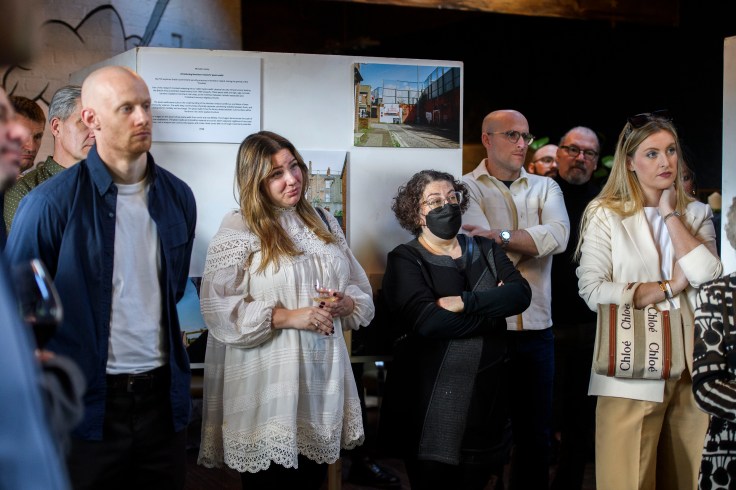
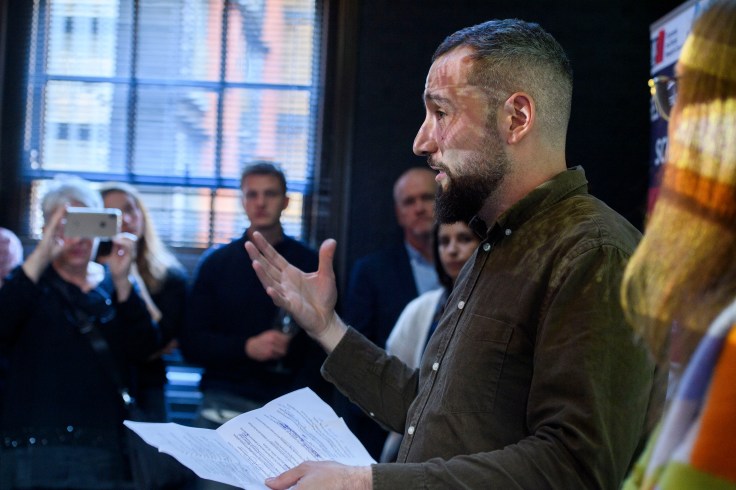
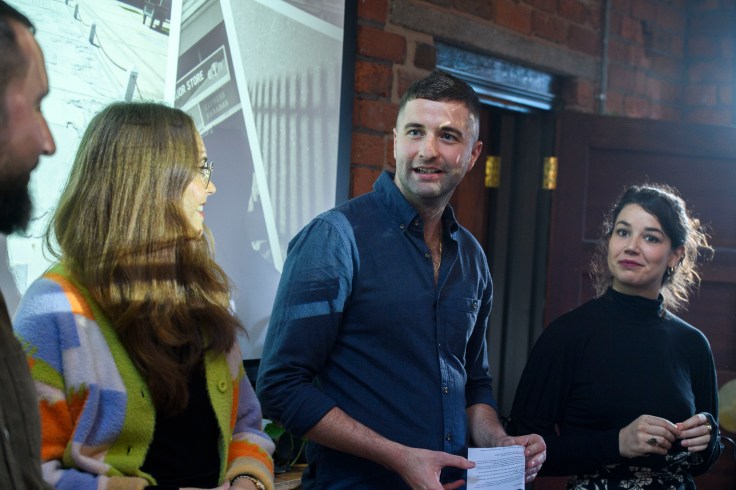
- The 2023 exhibition and launch event
Introducing the exhibition
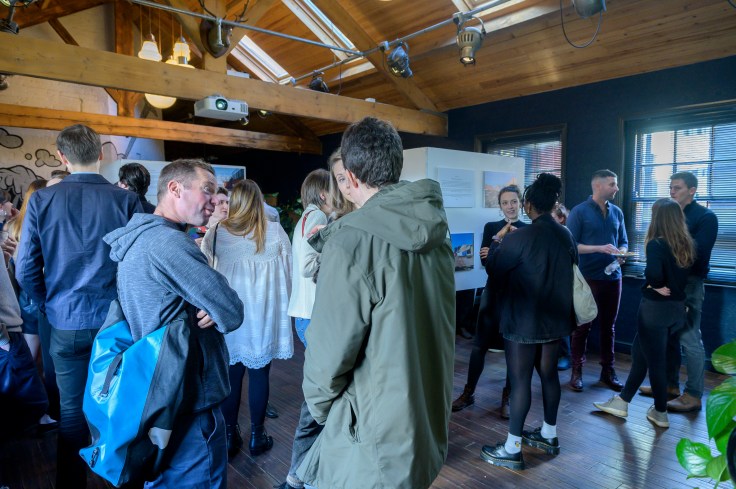
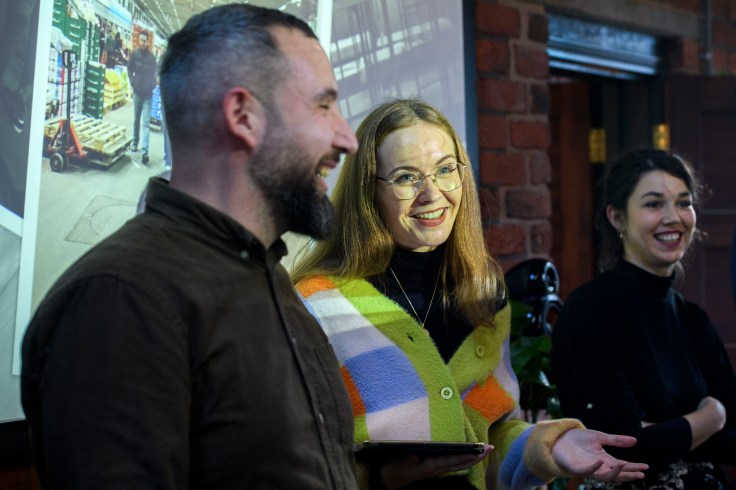
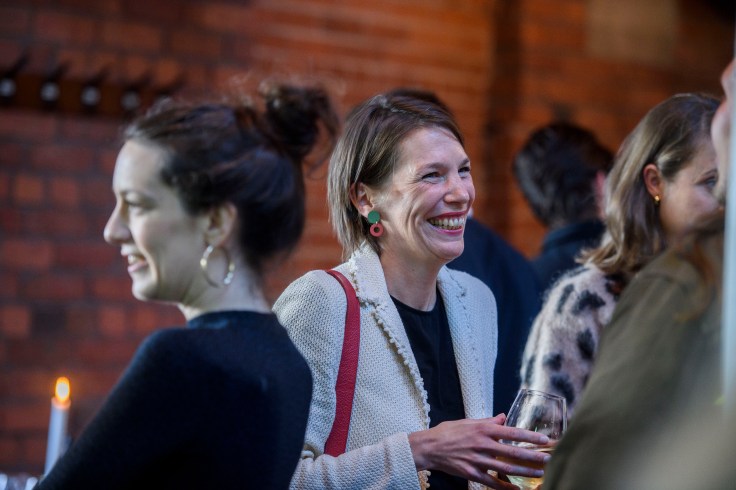
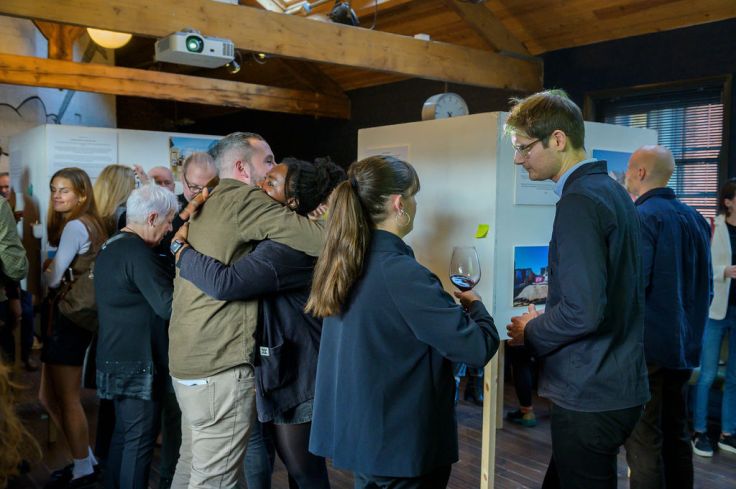
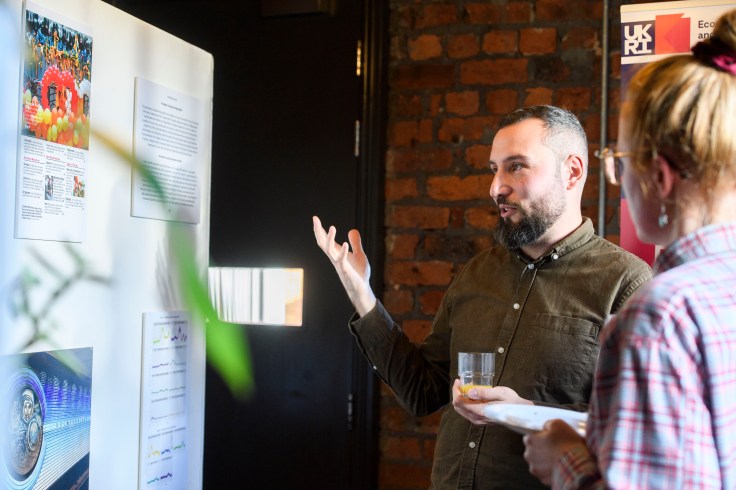
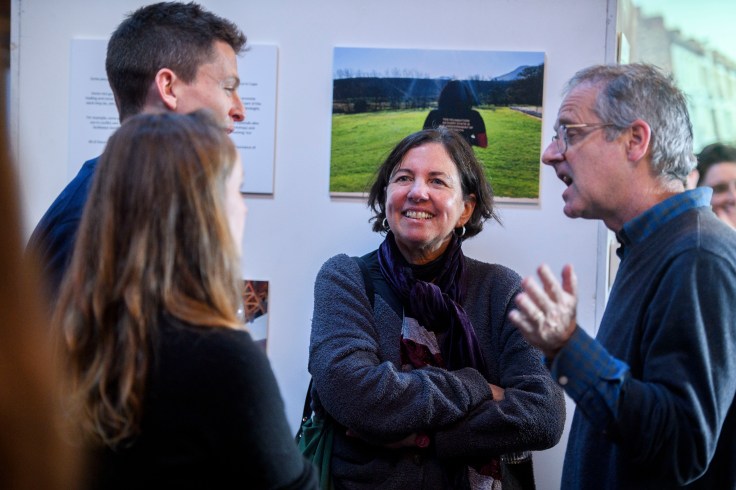
In 2023, four colleagues and I curated a public exhibition visually showcasing findings from our doctoral research, as part of the ESRC Festival of Social Science. The exhibition was launched to colleagues, friends, and family at the Chimney House in Sheffield. It then moved to the Winter Gardens in Sheffield City Centre for a week, where it was showcased to over 20,000 members of the public. People were invited to leave their reflections, thoughts, and comments directly on the exhibition via sticky notes.
As I said at the launch, I hope this exhibition begins to show how fieldwork is so much more than the 90,000-word thesis or articles you’ll read. It’s the experiences that you have that don’t necessarily make it into those formal publications, but which still shape the direction of your research and you as a researcher. It’s the people you meet, the street art that you see, the everyday conversations you have with taxi drivers and people at the supermarket, or the exhibitions that you go to on the weekend. One of the pictures you’ll see in the exhibition is a table full of food; this was a personal photograph I took during lunch at my isiXhosa language teacher’s house. Nolu and her family looked after me tremendously while I was in Cape Town. It’s those moments and those people that also make up the research experience.
Navigating the digital exhibition
You can navigate through each slideshow below to view the photographs displayed on each board, followed by the curatorial note. Towards the end of the page, there is also space for you to leave your own reflections. You’ll also find a video of the launch event and photographs of the exhibitions in situ.
Legacies of colonialism in Cape Town (1/4)


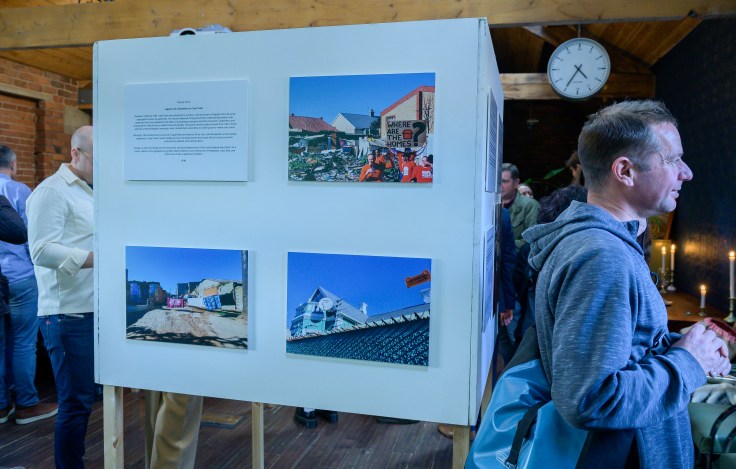
Between 1948 and 1990, Cape Town was subjected to a violent, colonial system of legally enforced racial segregation known as apartheid. The National Party government implemented policies that separated the city’s population into distinct racial groups and governed the movement, settlement, and employment of Black and Coloured people. Thousands were forcibly removed from their homes and into underdeveloped ‘townships’ to make space for ‘white only’ areas.
Although 1994 marked the formal end of apartheid and National Party rule, the colonial legacies remain deeply ingrained in Cape Town’s urban design and are intricately woven into the social, economic, institutional, political and cultural fabric of South Africa.
People are still recovering from the economic and social deprivation of this racial engineering project. As a result, violent crime, gangsterism, gender-based violence and conflicts over immigration, race, land, and resources remain significant problems.
Community spirit and ubuntu (2/4)


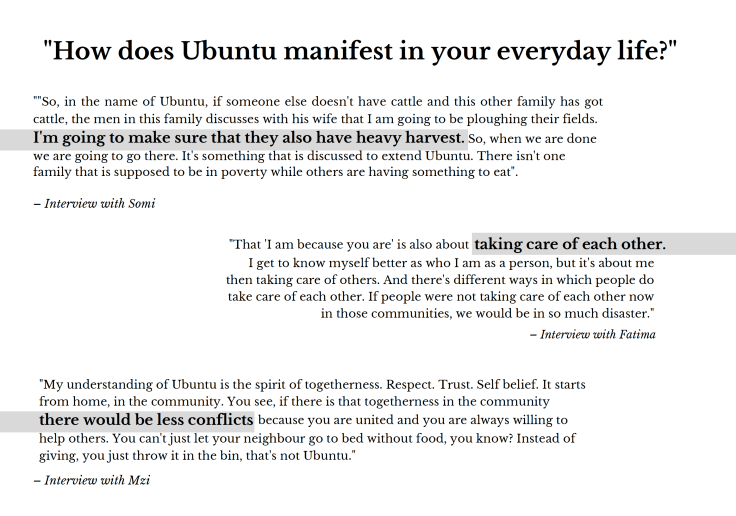
Though the post-apartheid era has been marred with conflict, inequality and violent crime, it has also been a story of ongoing reconciliation and community.
The spirit of ubuntu has played a central role in South Africa’s transition from apartheid. While not a new idea, having been integral to community life and conflict resolution way before apartheid, ubuntu was invoked during the Truth and Reconciliation Commission as a means to foster unity, national healing, and repair the divisions created by apartheid.
Ubuntu is typically encapsulated by the isiXhosa phrase umntu ngumuntu ngabantu, which loosely translates as ‘a person is a person because of/by/through other people’.
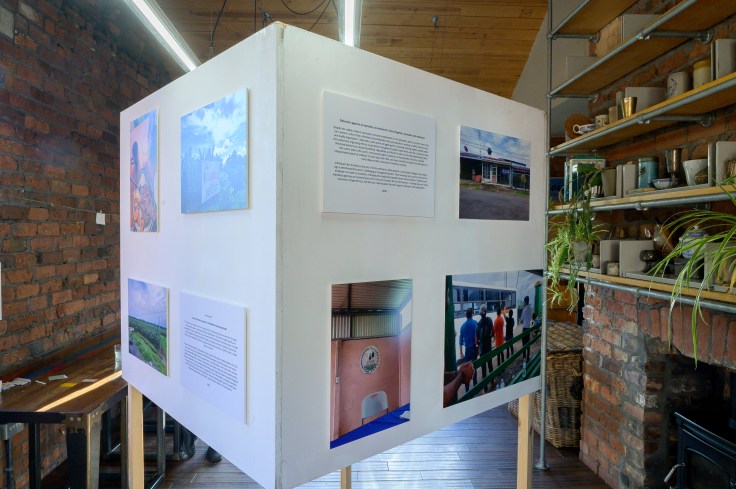
People broadly understand ubuntu as an eclectic set of values that are implicit in their everyday interactions with family, friends, and strangers. These values were described as acts of care, sharing, generosity, reciprocality, and togetherness, and are underpinned by the belief that individuals are interconnected and interdependent.
As such, ubuntu’s true essence is most vividly illustrated in people’s individual understanding of it and how it manifests in their everyday lives.
The role of ubuntu for building peace in communities (3/4)


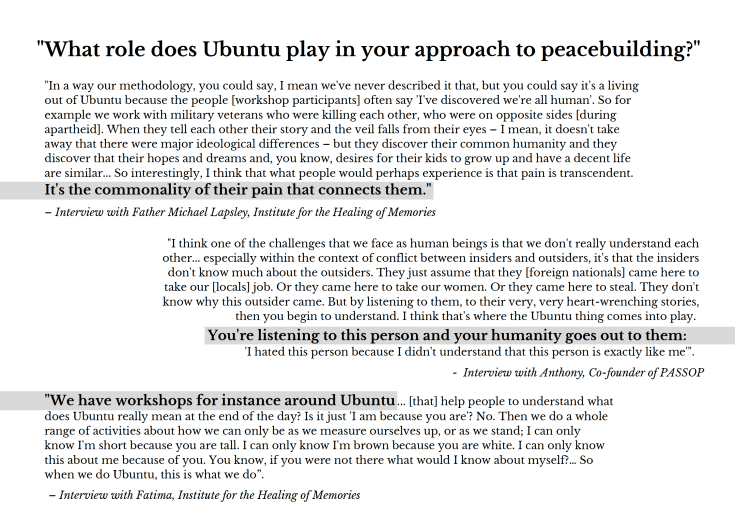
Some organisations and individuals draw on the values of ubuntu to transform conflict and violence in Cape Town’s communities towards more sustainable, peaceful relationships.
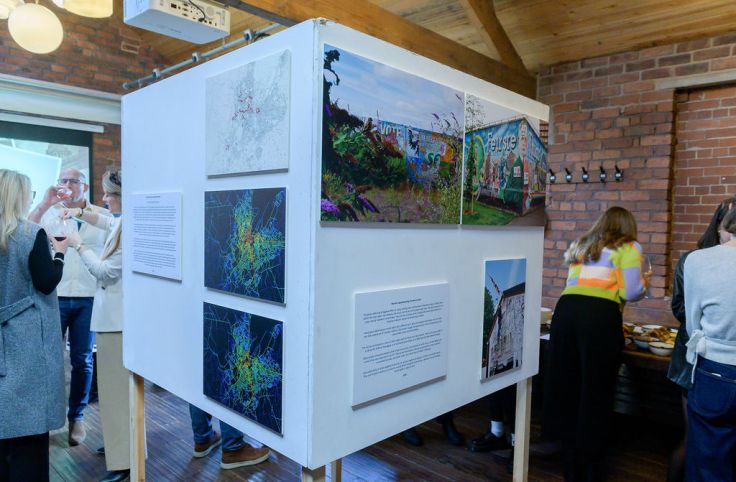
For example, some people explained how ubuntu is used to appeal to locals and foreign nationals who are in conflict with one another, as a way to encourage them to recognise that they have experienced common struggles. Some community-based organisations also use ubuntu explicitly as a tool in their youth workshops and facilitated dialogues with communities in conflict to emphasise that they have a common humanity or common pain/trauma.
Relations of care performed by ordinary people in their day-to-day lives, such as sharing, generosity and reciprocity, were also described as a “living-out” of ubuntu, and were said to help build mutual understanding, reciprocity, and trust towards people or groups defined as “the other”.
All of these explicit and implicit manifestations of ubuntu, in some way, centre around the importance of (re)building human relationships through listening, dialogue and everyday acts of care.
Leave your reflections (4/4)
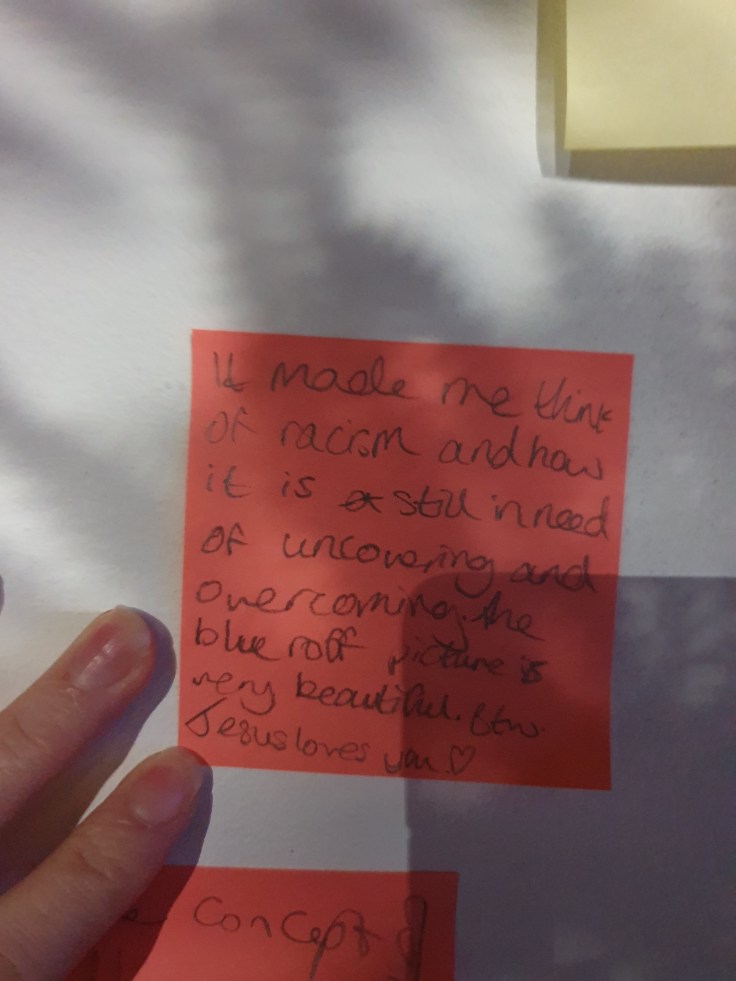
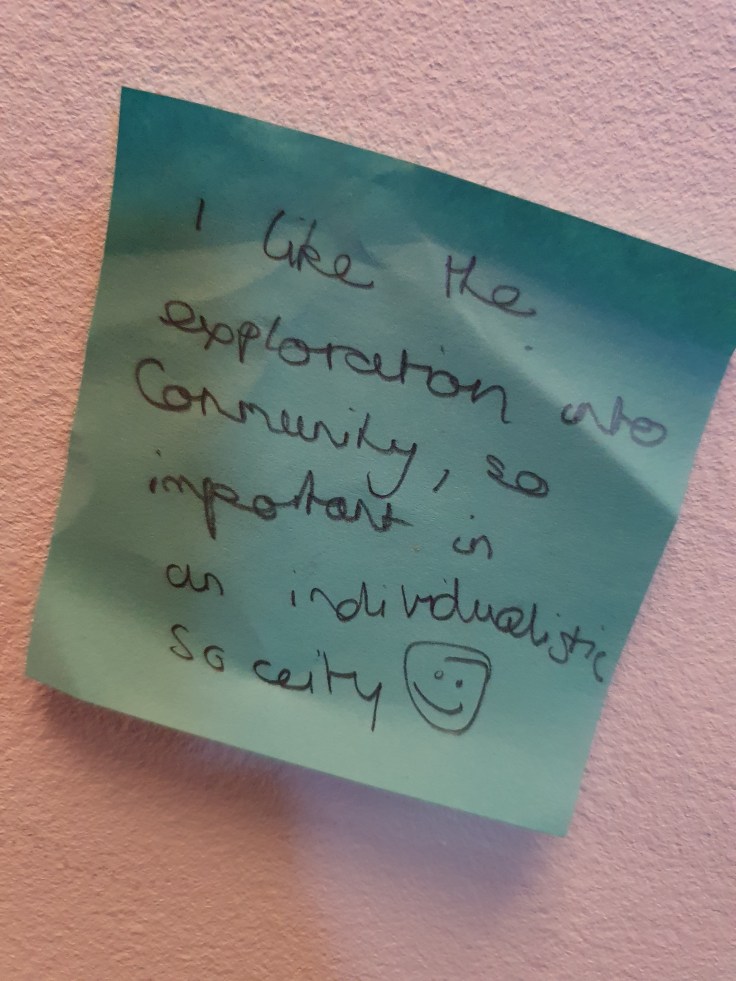
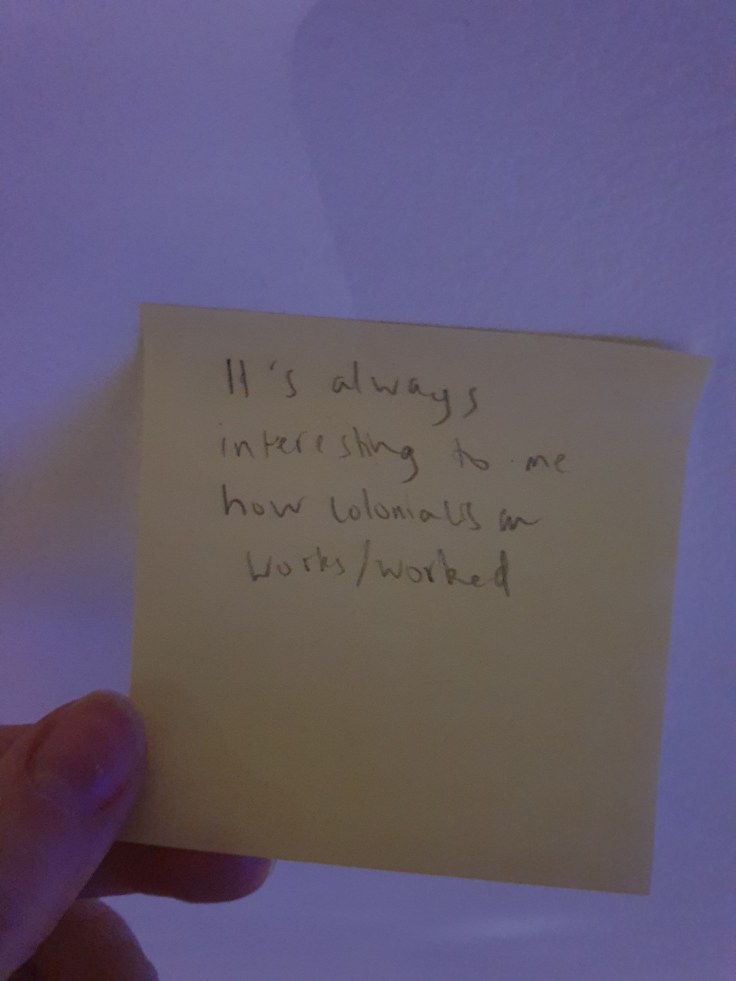
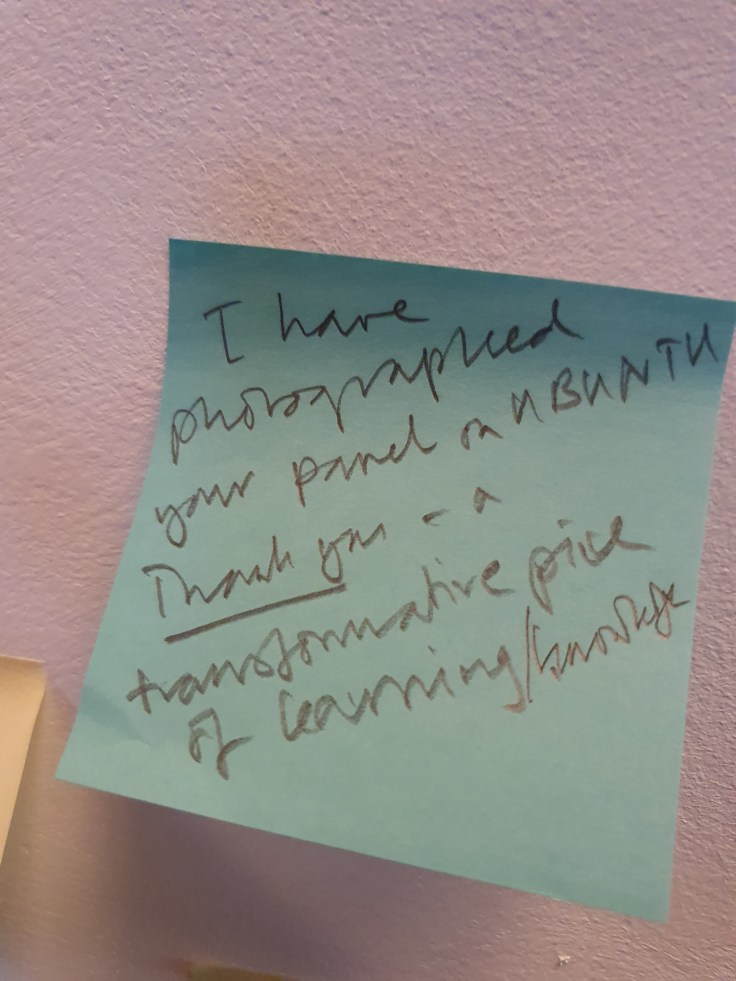
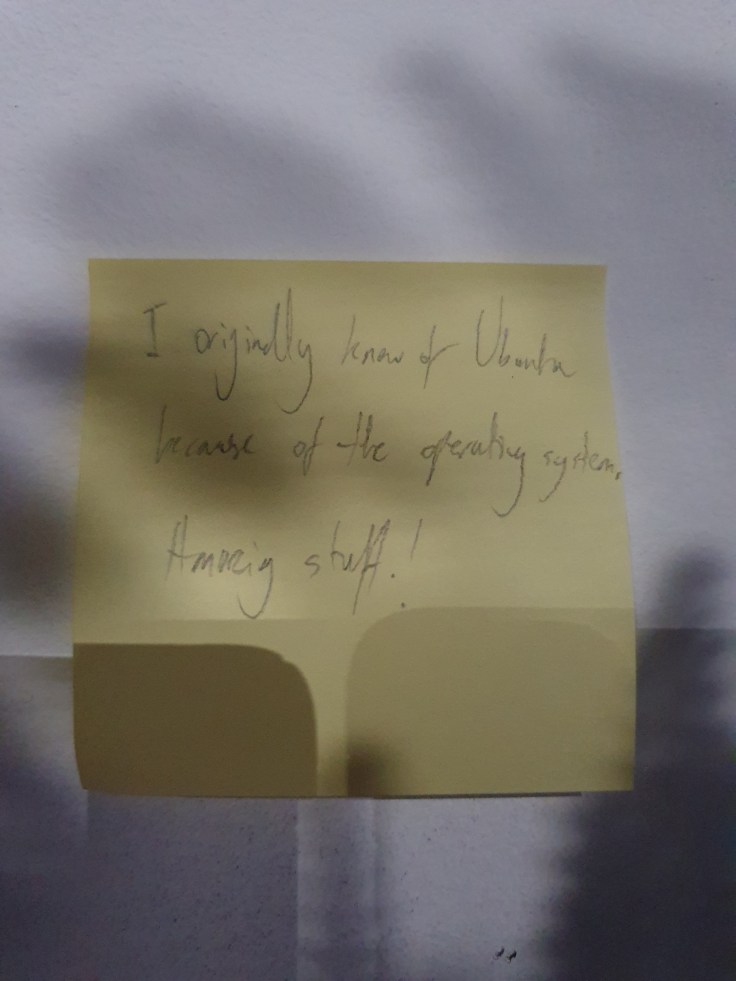
Visitors to the in-person exhibition were invited to leave their reflections on sticky notes on the fourth and final board. Below are some photos of their reflections. Scroll down to contribute your own.







Leave your own reflection
Please feel free to leave your reflections on the digital exhibition in the box below. What did the photographs and quotes make you think about? Did these materials raise any questions for you?
Reflections are anonymous, unless you include your name.
Thank you for your response. ✨

Thank you for sharing your research on Ubuntu and inspiring others!
Anonymous, 13 August 2025








 Dr Bryony Vince-Myers